 Typical
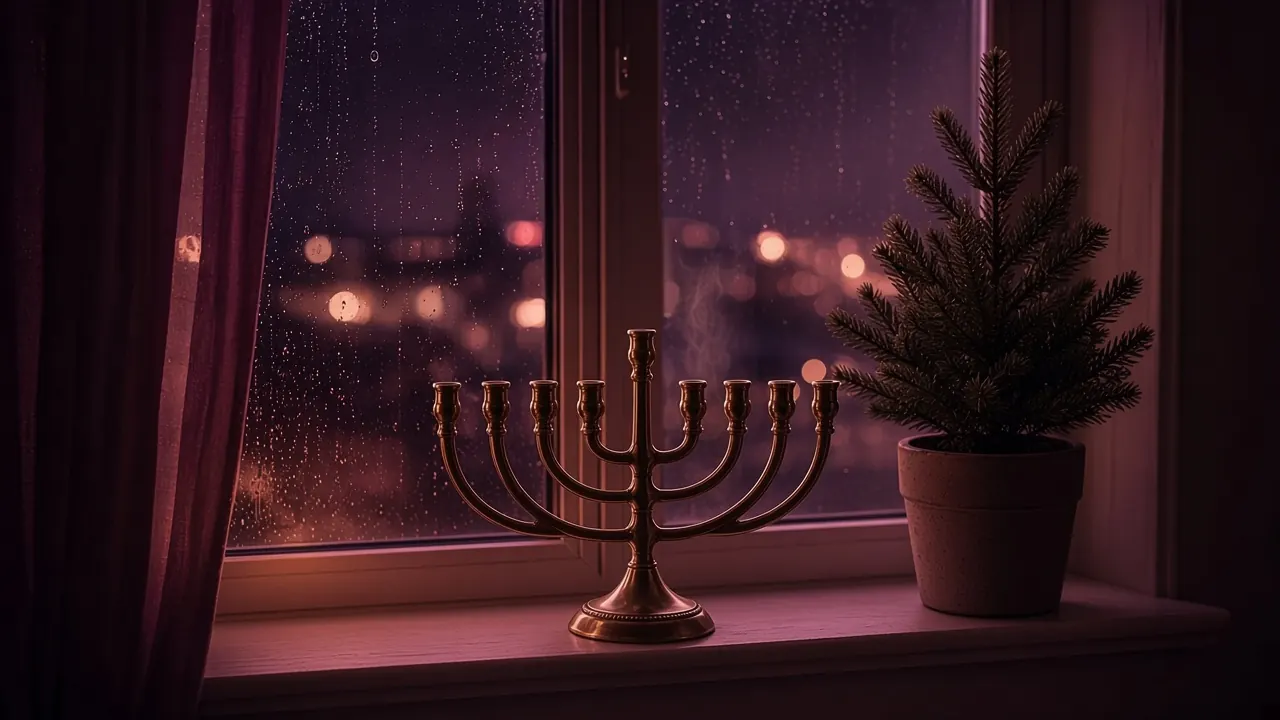
This year Hanukkah begins at sundown on Friday, December 4, and ends at nightfall on Saturday, December 12. Christmas is Friday the 25th. For once the two holidays are not stacked on the same week. People have already said, to my face, that we got lucky.
I thought so too, in October, when I looked at a calendar and felt my shoulders drop. A gap. Room to do one thing and then the other. What I have now, in the last week of November, is two finales and a stretch of ordinary days in the middle that are not ordinary at all, because I am already shopping for the second holiday while I am still lighting the first.
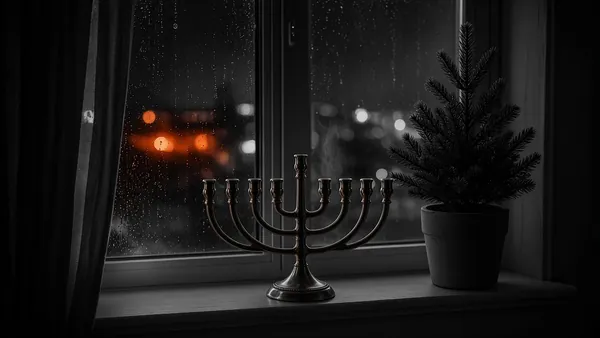
We do both. We have done both since the first December we spent in the same apartment, when I bought a small menorah and he bought a small tree and we told ourselves we were being generous, which we were, and also that generosity would be the hard part, which it was not. The hard part is stamina. The hard part is that both families can tell when their holiday has been treated as the opening act.
What "both" actually means
It means eight nights of showing up, some of them on weeknights after work, with a meal that is trying to be a meal and not a gesture. It means a tree, and the work of a tree, and a morning on the 25th that his mother will measure against every morning she ever made. It means gifts that have to make sense in two traditions without turning either one into décor.
I am not Jewish, and I do not tell this as if I were. I am the person who married into a December that already had a shape, and then asked that shape to make room for mine. He has been careful with my holiday. I have tried to be careful with his. Careful is not the same as unexhausted.
Pew Research Center, in its 2013 survey of Jewish Americans, found that 71 percent of Jews married to a non-Jewish spouse had a Christmas tree in the home, compared with 32 percent of Jews overall. That number is old, and it should be labeled as such. I include it because it is a named finding, not because it describes my particular living room. It does describe how common it is for these two Decembers to end up under the same roof, and how often the tree, not the menorah, is the thing people notice first. In 2016, Pew also found that one in five U.S. adults had been raised in an interfaith home. A lot of people learned, young, what it costs to keep two calendars running.
The American Psychiatric Association's 2025 poll is not an interfaith study. I will not pretend it is. It did find that 41 percent of adults anticipated more holiday stress than the year before, and that 32 percent were worried about family dynamics. A two-holiday December gives those worries more dates to land on.
The gap is not a gift
When the holidays overlap, you can at least admit the month is impossible and lower the production on both sides. When they separate, each one shows up asking for a full performance. I have already felt, in myself, the urge to "make Hanukkah special" and then "make Christmas special," as if special were a tank I could refill in thirteen days.
His parents will come for a weekend in early December. Mine will come for Christmas. Each visit will be, in its way, a test of whether the other holiday is an honored fact or a hobby. I have taken down a tree too early, and I have left one up too long. There is no correct number of days to leave a tree standing in a house that also just finished lighting candles. There is only who gets hurt, and whether you saw it coming.
I am tired of being the diplomat who also shops. I am tired of writing two sets of explanations in my head: why we will not be there on that night, why we will be there on this one, why a present arrived on the 6th and another on the 24th, why this is not a slight.
Who gets to be the main event
There is a look a parent can give a doorway. I have seen it on both sides of this month. It is the look that says, so this is the year you squeezed us in. Even when the dates are generous, the look can still arrive if the other holiday left fingerprints: a leftover decoration, a rushed meal, a gift that feels like a duty. I have tried to pre-explain our way out of that look. It does not work. What works, some of the time, is a plan said early, in the voice of the child of that house, not in the voice of the in-law trying to be fair.
I asked him, this year, to be the one who calls his parents. I will call mine. If either conversation goes badly, we will not send the other person in to soften it. Softening is how I have ended up in the middle of a family I do not lead.
What we are cutting
We sat down in mid-November and made a shorter December on purpose. Eight nights, but not eight productions: two of the nights are just us, no guests, no photograph. Christmas morning in one house, not a tour. One meal for his parents, one meal for mine, and no attempt to make those meals similar, as if similarity were respect.
I asked him to tell his family, in his words, what we are doing, so I am not the interpreter of his childhood. I will tell mine. If someone wants a fuller holiday, they can host it, and we will come when we can. We will not also be the event company.
If you do both, the calendar will try to flatter you this year. Do not let it. A gap is still a month. You can honor two traditions without giving each of them your last reserve of patience. You can also say, to a person you love, that you are at capacity, and that capacity is not a lack of respect.
Typical Male has his version of this month in this issue. He is tired of pretending it is simple too. That, at least, we got right.
Your turn
Is doing both a form of love, or a way to avoid a choice? Pick a side below, then read him: We Do Both, and I Stopped Pretending It's Simple
Sources
Pew Research Center, "Religious Beliefs and Practices of Jewish Americans" (Oct. 1, 2013) · Pew Research Center, "One-in-Five U.S. Adults Were Raised in Interfaith Homes" (Oct. 26, 2016) · American Psychiatric Association, Healthy Minds Poll (Nov. 4–5, 2025, n=2,203)