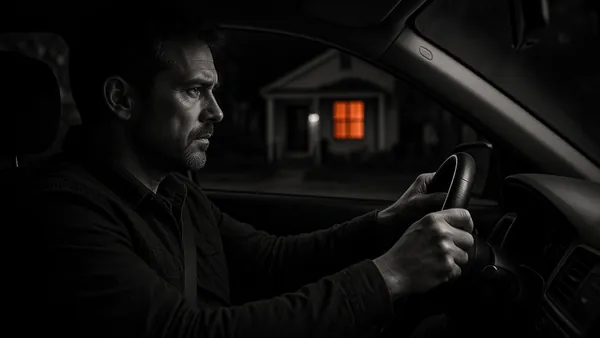
 Typical

Thanksgiving is a long meal. Christmas is a longer stay. He will be in the house for breakfast. He will have to have something in his hands when the paper starts coming off. Someone will ask him, in the kitchen, whether this is serious, as if he could give a correct answer over coffee.
I brought a man home for Christmas for the first time when I was 29. I briefed him in the car like a person heading into a hearing. I thought I was being helpful. I was also making it worse. He didn't need a dossier on my uncle. He needed to know where he would sleep, what to buy my mother, and which conversation I would interrupt if it started.
This is that shorter briefing, the one I wish I had given.
Before you get in the car
Tell him the true length of the visit, not the hopeful one. "We'll probably leave the 26th" is not a plan if your mother has already set a place for the 27th breakfast. Agree on the leave time before you arrive, and tell your family that time as a fact, not a mood. You can always stay later. You cannot always leave earlier once the guilt has been served.
Sleeping arrangements should be explicit, in advance, with whoever owns the house. Do not find out in the hallway on the 24th that he is on a couch in a room that never goes dark. If your family has rules about unmarried couples, believe them the first time they are hinted at. Decide whether you can live with the rule for three nights. If you cannot, stay nearby. A hotel is not a snub if it is the thing that lets you both be kind in the morning.
Gifts: you own the list for your family. Give him one or two names at most, with a budget and a deadline, or buy those gifts yourself and let him sign the card. A man standing empty-handed on Christmas morning in someone else's house will spend the next hour apologizing with his shoulders. Typical Male has a whole piece about that feeling. You can prevent it in November.
The briefing that actually helps
Skip the oral history. Give him four things, on paper if you have to:
1. The people's names, and how they are related to you, nothing else. 2. The one topic to leave alone (money, a divorce, a job loss, the uncle's new wife). 3. The one tradition that will happen whether he understands it or not (church, a prayer, a movie, a morning walk). 4. The signal you will use if you need to leave a room together. A glass set down. A question about the dog. Something boring.
Tell him he does not have to be impressive. Impressive is how first visits go wrong. He has to be punctual, reasonably dressed, and willing to dry dishes without a speech about it. If your family is loud, he can be quiet. Quiet reads as respectful more often than it reads as cold, especially in a house that is already performing Christmas.
If your family is likely to test him, say that too. "My brother will ask what you do, twice" is useful. "They're going to love you" is not.
During the stay
Do not use him as a prop to win an old argument with your parents. He is not proof that you are fine. He is a guest, and he can tell when he is being entered into evidence.
Translate when you have to, then stop translating. If your mother is sharp, you may say, she doesn't mean it like that, once. If she does mean it like that, you do not owe the table a soft edit. You owe him a later walk around the block where you tell the truth.
Build in one hour a day that is only yours: a walk, a drive for coffee, a grocery run that does not need groceries. First Christmas visits go bad in the late afternoon of the second day, when there is no door left to open and everyone is still in the kitchen. Leave the house before that hour if you can.
Church, if it is part of the day: tell him beforehand whether he is expected to come, to kneel, to sing, or just to sit. Let him opt out without a debate in the driveway. A man who sits this one out is not rejecting your childhood. He is declining a ritual he does not have a place in yet. You can go without him. You can also skip it this year. Neither choice has to be a referendum.
If it is going badly
You can leave. You can leave on Christmas, even. People will survive a shorter visit. They will not forget a visit in which someone was quietly miserable for three days and then polite in a thank-you text.
A line that works: "We're going to head out this afternoon. Thank you for having us." Do not hold a hearing in the foyer. If you need a reason, "early drive" is enough. If the house is not safe, you do not need a prettier reason. Go.
After you leave, do not recap the whole visit in the first ten miles. Let him find a radio station. Ask one question: was any of that all right? Then listen to the actual answer.
Your turn
Is bringing him home for Christmas a gift, or a test? Pick a side below, then read it from the driveway: Meeting Her Family at Christmas
Frequently asked questions
When is the right year to bring him home for Christmas?
When the relationship can stand a long weekend in close quarters, and when you are willing to leave early if it cannot. A first meeting is often easier over a shorter holiday. Christmas is a second visit kind of test, unless there is a reason it has to be this year.
What should he bring as a gift?
Something for the host that does not require inside knowledge: good coffee, a food everyone can eat, flowers that are already in a vase. You can name a price. You should not send him into a mall on the 23rd to prove he gets your family.
How long should the visit be?
Two nights is plenty for a first Christmas. Three if the travel is long and the house is kind. A week is for a later year.