 Typical
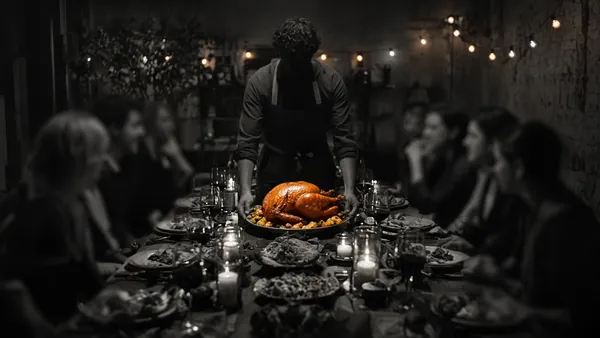
Friendsgiving is the only holiday where the guest list is a love letter. Nobody is there out of obligation. Everyone at the table is someone you'd text at 2 a.m.
Friendsgiving started, for a lot of us, as the holiday for people who couldn't get home. Somewhere along the way it became the one we look forward to most: no seating chart politics, no one asking when you'll settle down, just a table of people who chose each other.
It's not a niche anymore. In Savings.com’s Thanksgiving trends study, 14% of Americans planned a Friendsgiving in addition to Thanksgiving, and 4% planned one instead of it.
Savings.com calls it especially popular among Gen Z and younger millennials, and in the same study nearly one in three people named family dynamics as one of the most stressful parts of the holiday. For a lot of us, the chosen table isn't a replacement. It's a relief.
Nobody is at a Friendsgiving table out of obligation. That's the whole magic, and the whole risk.
Is Friendsgiving replacing family Thanksgiving?
Mostly not, at least not yet. In the same study, 14% planned Friendsgiving on top of the family meal and only 4% instead of it. But the debate is real. The case for the chosen table: no seating-chart politics, no one interrogating your love life, no relatives to brace for. The case for the family table: it's there whether you earned it or not, and some of the people at it won't be there forever. Friend groups shift. A grandmother's last Thanksgiving doesn't come back.
If you can do both, do both. If you can't, choose the one you'd regret missing.
The potluck system
Make a shared list with categories (main, two vegetables, one starch, bread, two desserts, drinks, ice) and let people claim slots. Assign the main to the host or to whoever loves cooking it. Ask everyone to bring their dish ready to serve, plus a container for leftovers.
A two-week plan for a first-time host
Two weeks out: send the date and the claim list, and ask about allergies and diets. One week out: borrow chairs, a big pan and a second pair of hands for the day. Two days out: shop, clear fridge space and start thawing the bird if it's frozen; it takes days, not hours. The night before: set the table and write the oven schedule on paper. The day: name one friend co-host for drinks, coats and ice. Sit down when the food does.
Traditions worth stealing
A dish from home: everyone brings something from their family's table and tells its story. A gratitude round, kept optional and short. A Polaroid of the whole table, pinned to the fridge until next year. A cleanup draft: pairs drawn from a hat for each round of dishes, so the host is never the last one at the sink.
Make room
Friendsgiving is also where people land when home is complicated: a family that doesn't accept them, a loss this year, a long way from anywhere. The American Psychological Association found 38% of adults said missing family or loved ones causes them stress during the holidays. If you're hosting, ask yourself who in your circle might be alone this year, and invite them plainly: "We have a seat for you. No pressure, just come."
The awkward parts nobody mentions
The couple who just broke up. Both are your friends. Ask each privately whether they want to come knowing the other will be there, and let them choose. Don't make the choice for them.
The friend who always brings nothing. Next year, assign them ice and cups. Some people need a job, not a guilt trip.
The date nobody's met. Set an extra place and treat them like a regular. You'd want the same.
Protect the host
Hosting is consistently one of the most stressful parts of the season; it ranked second only to cooking in the Savings.com study (36%). Delegate the drinks, the ice and the playlist. Sit down when the food does.
A man who hosted his first Friendsgiving last year wrote about what it taught him about his mother. It's at Typical Male: I Hosted Friendsgiving and Finally Understood My Mother.
Frequently asked questions
What is Friendsgiving?
A Thanksgiving-style meal with friends, usually a potluck, held in addition to or instead of a family Thanksgiving. Many groups hold it the weekend before the holiday.
How do you host a Friendsgiving?
Send a shared list of dishes for guests to claim, make the main yourself or assign it to whoever loves cooking it, ask about dietary needs, borrow chairs early and set the table the night before.
What should guests bring to Friendsgiving?
Whatever they claimed on the list, ready to serve, plus a container for leftovers. If there's no list, bring a side or a dessert and ask the host what's missing, often ice.
How many people celebrate Friendsgiving?
Savings.com’s study found 14% of Americans planned a Friendsgiving in addition to family Thanksgiving and 4% instead of it.
Your turn
Friendsgiving or family Thanksgiving? Pick a side below, and send us the tradition your friends will never let you drop.
Sources
Savings.com, Thanksgiving trends study (n=2,502) · American Psychological Association, holiday season stress poll, Nov 2023 (n=2,061)