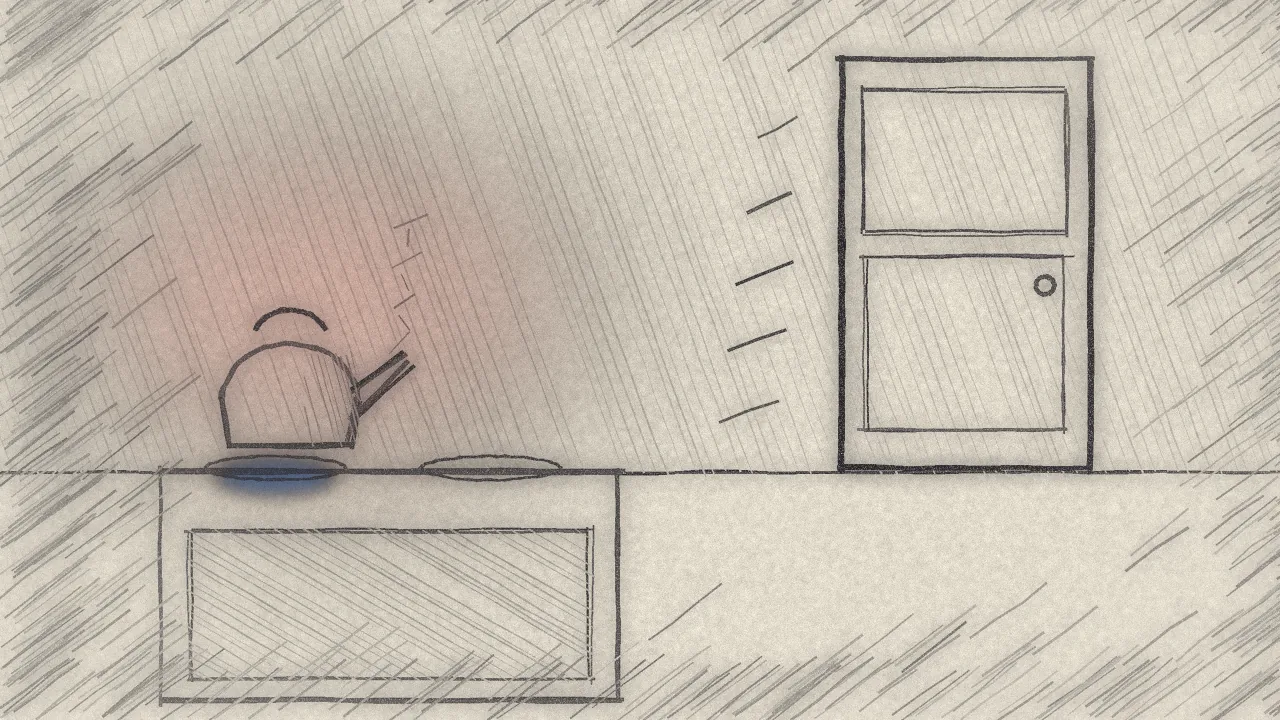
She yelled exactly once in our childhood. It was 1987, the kitchen, a dropped casserole. None of us remember what she said. We all remember that she said something. My brother was nine. I was eleven. My sister was six. We had been bickering, low-grade, the way siblings bicker, and our mother had been doing the after-dinner orchestration she did every night, and somewhere between the casserole leaving her hands and the casserole hitting the floor, the kitchen lit up with a sentence none of us had ever heard her say.
Here is what I remember of the sentence. I remember the word 'I.' I remember the word 'tired.' I remember the cadence, which was not the cadence she normally used. She normally used the cadence of a woman who had practiced patience as a profession. The cadence she used that evening was the cadence of someone who had been keeping a ledger for two decades and was, briefly, reading from it. The reading lasted maybe forty seconds. Then she walked out of the kitchen and closed her bedroom door and we did not see her for two hours.
Here is the next part. The three of us did not regress. We did not become afraid of her. We became — I am almost ashamed to write this, but it is true — slightly easier children. We stopped bickering for three weeks. My brother carried his own plate to the sink, which he had never done. My sister learned, sometime that month, to brush her own hair. We had been operating, without realizing it, on the assumption that our mother was a renewable resource. The casserole was the moment we updated the assumption.
She apologized to us the next day, individually, sitting on the edges of our beds. She told my brother that he had not deserved her tone. She told my sister that grown-ups have hard days too. She told me, who was eleven and would not understand any of it until twenty years later, that she had not slept in three nights and that this was not an excuse. She used the word excuse. I have written it down many times since. The thing she would not give herself, then or ever again, was the version of female anger that did not require an apology the next morning. I have inherited some of that and am still working it out of my own kitchen. She was not too emotional. She was, on that one evening, exactly emotional enough.
She died in 2019. At the wake my sister said, out of nowhere: 'Do you remember when she yelled.' Both of us did. My brother joined the conversation a minute later and said the same thing, unprompted. We had each been carrying it for thirty-two years as the one time the lid had come off. We had each, separately, in our own lives, used it as evidence of something we were not sure how to name. What I think I would say now, at forty-eight, is that the one time she yelled was the truest sentence she ever spoke to us. The rest was, mostly, performance. The performance was the love. So was the breaking. We got both. We did not deserve only one.