 Typical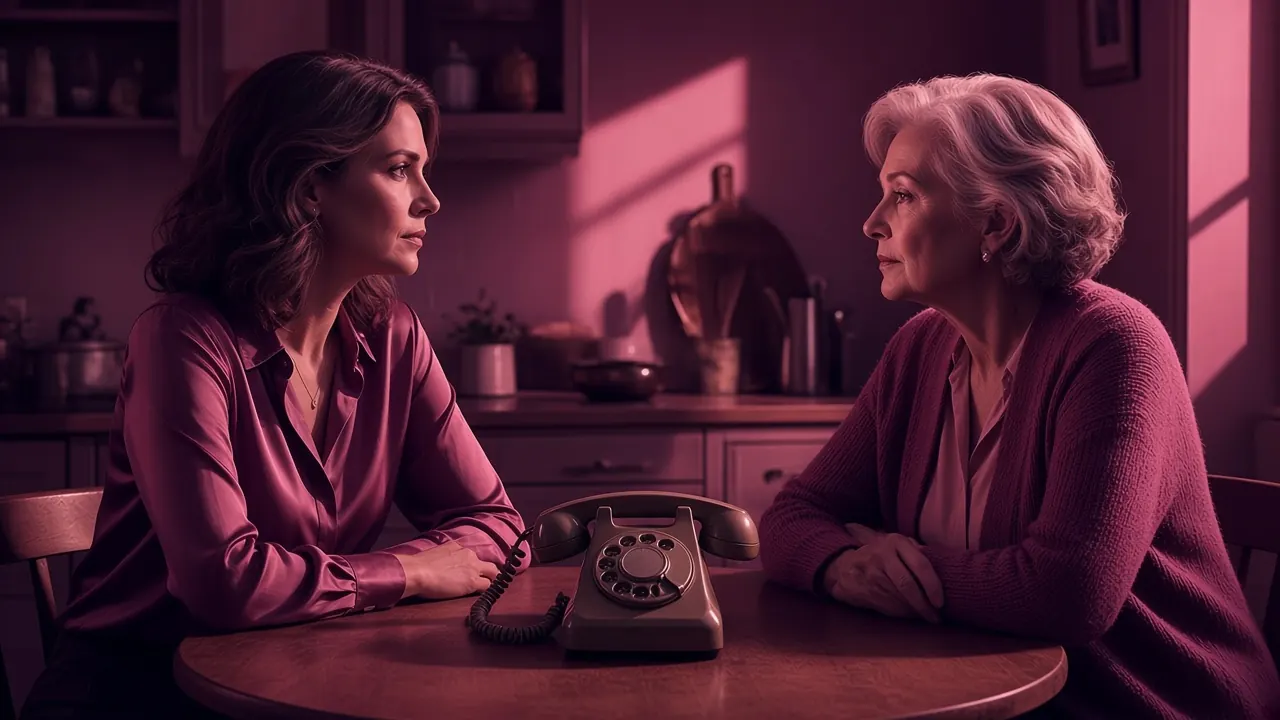
She lived a whole life I never asked her about. I called her every Sunday for fourteen years. We talked about the weather, my brother’s kids, whether the casserole had turned out. We did not talk about the year my father stopped speaking to her, and we did not talk about the miscarriage in 1976, and we did not talk about the first time she felt her body had stopped belonging to her. I learned about all of it later, from her sister, after she died.
I am a therapist. I sit across from women every week who are reckoning with what their mothers did and did not tell them. The pattern is so consistent it has stopped surprising me: a generation of women who handed down the appearance of stability and almost none of its underlying weather. We were raised by people who survived something we don’t have the language for, and they decided — mostly without ever discussing it — not to give us that language either.
The conventional read on this is generational: that they were stoic, that they were trained for stoicism, that we should be grateful. I believe that read. I also think it’s incomplete. There is a second thing happening, and I want to name it carefully because it’s the part most of my clients arrive with and can’t articulate. Their mothers loved them. Their mothers also withheld from them, often deliberately, the texture of what being a woman had cost. And the daughters — my clients, me — grew up sensing that something heavy was in the room and that asking about it would be a failure of decorum.
The withholding wasn’t about shame. Or it wasn’t only about shame. It was about protection, calibrated through a script most of these women had inherited from their own mothers: don’t hand your daughter the worst of it. Don’t make her afraid before she has to be. Don’t plant the bruise; let her find her own path through. The intent was tenderness. The result, sometimes, was a daughter standing alone in a room she couldn’t map.
I started asking my mother questions in her last year. I waited too long. We had four real conversations about her life before she died, and each one rearranged something in me. She told me she had wanted to be an architect and was told there were no women architects. She told me she had loved someone before my father, briefly, and she pronounced his name with the same care she pronounced ours. She told me she had taken Valium for nineteen years and stopped only because the doctor retired. None of these things were secrets, exactly. They were just things she had decided long ago not to say.
What I keep returning to: she didn’t think I needed to know. She thought I had the easier life she had built, and she didn’t want her difficulty cluttering it. The respect in that gesture is real. So is the loss. I had been trying to navigate by a map she had edited for my comfort, and the editing was the source of half my disorientation.
I bring this up not to litigate her choices. I bring it up because the women I see professionally are doing their own version of the editing, in real time, with their own daughters. They are deciding what to keep from them. They are weighing how much weather their kid can handle. And they are mostly, just like our mothers, deciding to withhold.
The case for telling them more isn’t obvious. The case against is, in fact, the same one our mothers made: this isn’t their burden, why hand it down. But the daughters in my office, twenty and thirty and fifty years on, almost universally wish they had been told. Wish they had a fuller picture of what their mother’s life had cost. Wish the silences had been narrated. The most common sentence in my notes from women between thirty-five and sixty is ‘I didn’t know what she’d been through until after she was gone.’
I have a daughter. She is twenty-four. I have not told her certain things about my life that I am still deciding whether to tell her. I notice the script in myself. I notice the impulse to protect, and I notice that the protection looks suspiciously like the same maneuver my mother performed on me, and that of her mother before her. I have started, in small increments, to break the pattern. It feels less like confession and more like rebroadcasting weather data. The information was always there. It was just being kept from the people who would have most benefited from knowing.
What I would tell any woman reading this who is debating whether to ask her mother questions she has never asked: ask. Not because you’re owed an answer. Because the answer reorganizes the room you grew up in, and the reorganization is almost always less painful than the not-knowing.
And what I would tell any woman who is debating whether to tell her daughter something hard: she is going to find out. From her aunt. From a letter. From a sentence overheard at a party. From the silence itself, eventually. The choice isn’t whether she knows. The choice is whether she gets to know it from you, with your face still on it, your tone, your context. That gift is enormous and you don’t have to give all of it. You can give a piece. The piece is the inheritance.
My mother and I had four conversations. I think about them every week. She was funnier than I had realized, and braver, and angrier. The mother I had loved my whole life turned out to be larger than the version I’d had access to. The grief is partly that I missed her at full size. The gift is that I caught up at the end.