 Typical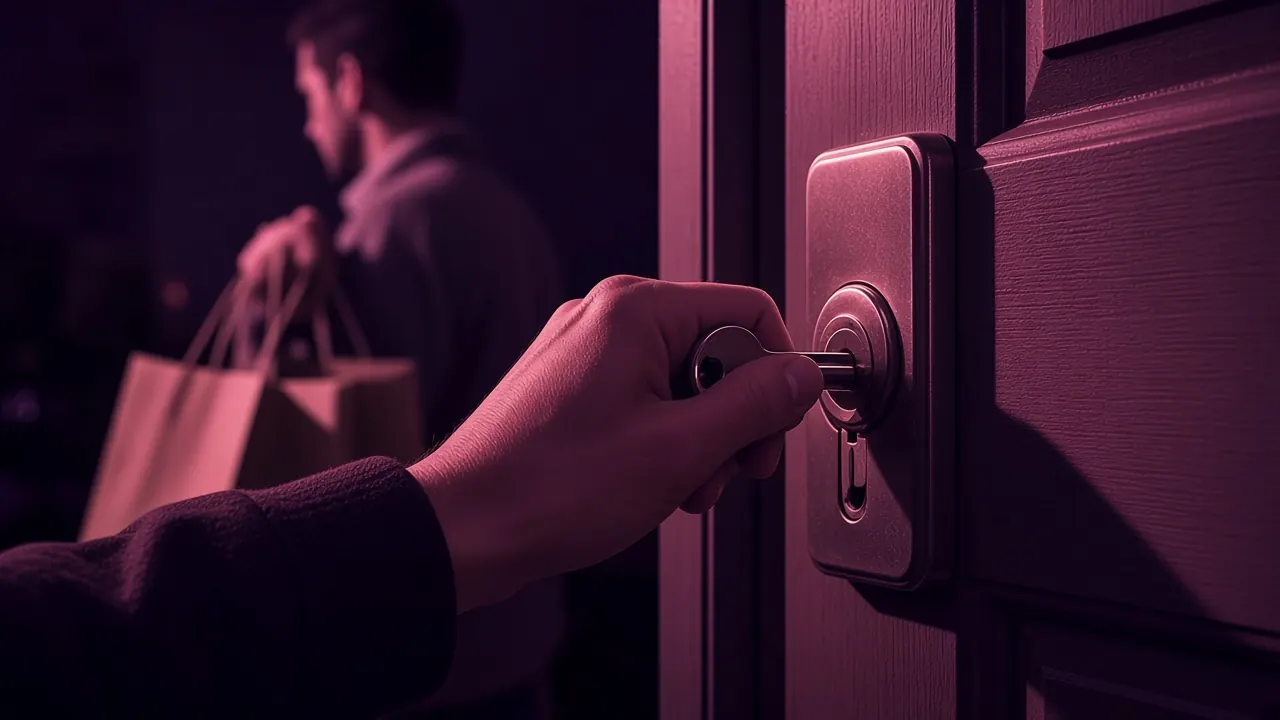
We have been married for nineteen years and I turn the key. I did not know this was a fact about us until I started paying attention to small things. He carries the groceries; I turn the key. He drives on long trips; I turn the key. He locks up at night; in the morning, when we leave, I turn the key.
It is not a chore. It takes half a second. The lock is old and a little stiff and you have to lift the knob slightly as you turn. There is a small competence to it. I had thought, for nineteen years, that he let me turn the key because he was being chivalrous in some throwback way, the way men used to walk on the street side of the sidewalk. I asked him about it last March, in the car, on the way to his mother’s. He thought about it for a while. Then he said: ‘I let you turn the key because you taught me, in the third year of our marriage, that you needed to be the person who entered the house first.’
I had not remembered teaching him that. I went home and sat in the kitchen and thought about it. He was right. There had been a year — the year my father died, the year before our second child was born — when I had begun to need, in a way I could not have articulated at the time, to be the one who crossed the threshold. To know, with my body, that I had entered the house. To not be following someone into my own life.
He had read this in me without my saying it. He had adjusted around it. He had taken on the lock’s small inconvenience — the lifted knob, the stiff turn — without comment, and he had done it for sixteen years, and I had not noticed I had asked.
I want to write this down because I think it is the part of marriage I most rarely see described. The choreographies. The way two people, if they are paying attention, learn each other’s thresholds and then absorb them. Most of what gets counted in domestic labor is the visible work — the laundry, the dishes, the calendars, the pediatrician appointments. The choreographies are not on any spreadsheet. They are how two adults end up sharing a doorway.
I have started, in the past year, to notice my half of the choreography I had not been seeing. I am the one who answers the phone when the school calls. I am the one who notices when his mother sounds different. I am the one who, in the seventeen seconds before we leave a friend’s house, has already assembled in my head the list of who hugged whom and whether we owe anyone a follow-up text. The map of this work is not new. The map is in books. What was new for me was seeing my own version of it, in our own house, in the angle of my own body in our own doorway.
I do not want to make the choreographies sound noble. Some of them are inheritance. Some of them are my mother in me. The script that says I am the one who reads the room was installed in me before I had language for it. I have done some of the work to look at it. I have not done all of the work. Some days I am still surprised by my own reflexes.
What I would say to the woman younger than me who is wondering whether to point at the choreography in her own marriage: point at it gently and once. The first naming is the whole work. He will see it or he will not. If he does, the room rearranges. If he does not, you have learned something it is better to know early.
My husband and I do not have a system. We have a doorway and a stiff lock and nineteen years of small adjustments neither of us writes down. He drives. I turn the key. He carries the heavy thing. I read the room. I am not sure either of us could have negotiated this in advance. I am sure neither of us would un-negotiate it now.