 Typical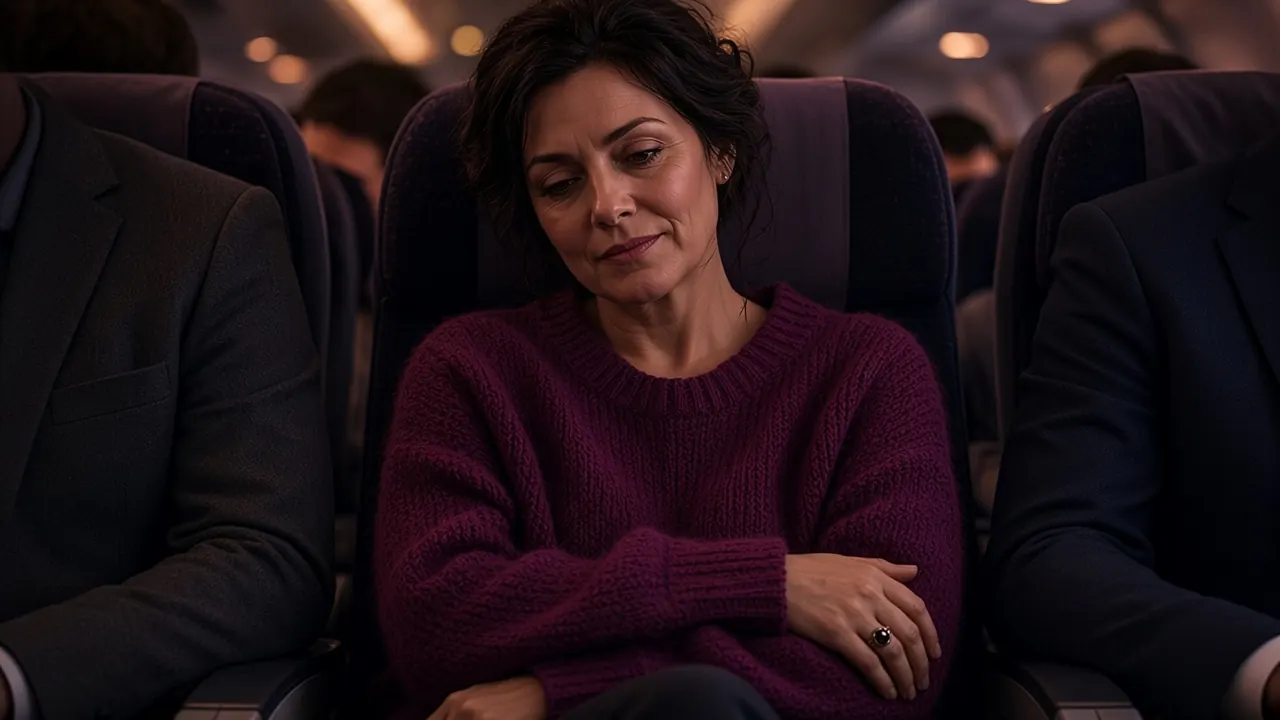
I have flown for thirty years and I have never put my elbow on the armrest. I figured this out at fifty-six, in seat 14E, on a Tuesday-morning flight to Phoenix. The man on my right had taken the armrest before we took off, the way men do. The man on my left had taken the armrest before we took off, the way men do. I had folded my hands in my lap and tucked my elbows into my ribs and not noticed I was doing it. The flight attendant came by with the cart. I unfolded my hands to take the coffee. My elbow grazed his elbow. He moved his elbow approximately one millimeter. I retracted mine four inches.
I have replayed the four inches. It is more than I needed. I had room for the cup. I had room for the elbow. I gave up the elbow.
I started watching for the four inches. On the next flight I had, two weeks later, I made myself put my elbow down. I lasted approximately fourteen minutes. The man on my left was not doing anything wrong. He was reading a magazine. My elbow was touching his elbow at the level of the third rib. It was not unpleasant. It was loud in my head. I could feel the elbow the way you feel a tooth. I gave up. I tucked the elbow back into my ribs and watched a movie I did not like.
I want to talk about what the elbow is. It is not the elbow. It is the practice of taking up the volume of space your body is occupying, no more, no less, and refusing to subtract on the assumption that someone else is more entitled to it. The grammar of the public bathroom line turns out to be the grammar of the armrest, and the grammar of the subway seat, and the grammar of the elevator that is full and the elevator that is not full.
I have measured myself on the subway. I sit on the L train almost every day. I take, on average, the width of one and a quarter seats. Men on the same train take, on average, the width of one and three-quarter seats. I have not done this with calipers. I have done it with my eyes and a counter app on my phone and seventeen rides. The difference is half a seat. The difference is the half-step.
What I learned at fifty-six, on the Phoenix flight, is that the body keeps a budget I had not signed. There is a quantity of space my body has been allotted, and the body has decided, without my consent, to spend that allotment in increments smaller than the seat. The body has its reasons. The body has been told, all of its life, that it should not be the thing in the room that you bump into. The body has obliged. The body is fifty-six and tired and still obliging.
I am not going to tell you I put the elbow down. I have, three times. None of them on flights longer than two hours. None of them in middle seats. The middle seat is the hardest. The middle seat is where you have two of them. The middle seat is where the calculus is widest and the body’s training is deepest.
I have started flying aisle on principle. It is, in its way, a surrender. It is also a peace. I would rather argue with one man than two. I would rather have one armrest I cannot use than two armrests I cannot use. The armrest on the aisle side is the one I have been winning, on average, eighty percent of the time, for six months. The mythology around women’s comfort with public space turns out to have been a mythology I had been writing about my own body. The body did not get the memo. The body did not, it turns out, ever ask.
I want to leave with one thing the older woman next to me on the Phoenix flight said. I told her about the elbow somewhere over New Mexico. She was reading a paperback. She put it face down on her lap and looked at me and said, ‘Honey. I gave up trying to take the armrest. I started taking the window seat. The window doesn’t move.’ I think about that a lot. The window doesn’t move. Some days I think she gave up. Most days I think she won.