 Typical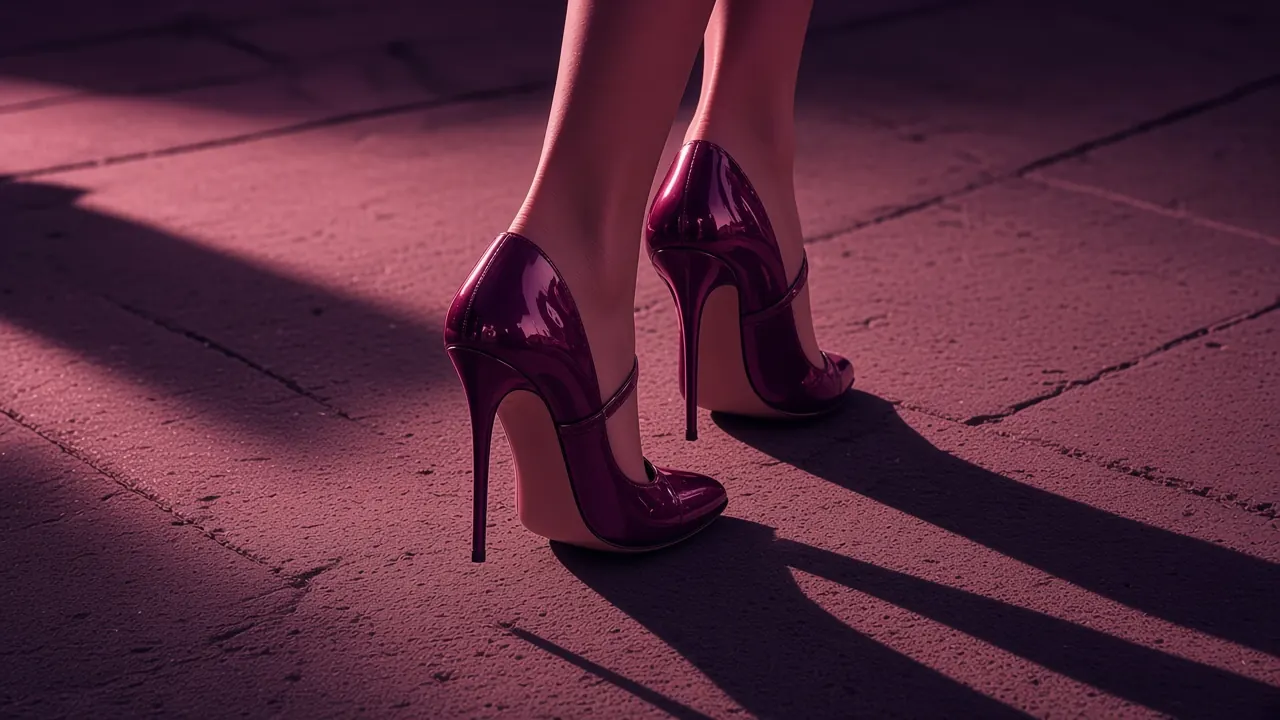
In the photograph the CEO is laughing. She is also, if you look at her feet, standing exactly half a step back from the man whose name is on the door. I did not notice this the day I took it. I noticed it eleven years later, going through contact sheets for a retrospective, and once I saw it I could not stop seeing it. The half-step back. It is in almost every photograph I have ever taken of a woman in a room with men.
I am a photojournalist. For twenty years I have shot rooms — boardrooms, operating theaters, dining rooms, classrooms, courtrooms. The frame is the thing I have been trained to read. After the contact sheets I went back through twenty years of work. The pattern was unambiguous. In rooms where two or more men shared the air with one woman, the woman, almost without exception, was a few inches behind the visual center. Not far enough that anyone would notice in the moment. Just far enough to be the second thing your eye lands on.
She is not retreating. I want to be clear about that. She is making room. The half-step is generosity, or training, or a calculation made so often it has become breath. I learned to read the half-step the same way I learned to read the apology preambles women open meetings with — as a piece of grammar so universal it disappears into the language.
I started calling the women in the photographs. Fourteen of them, one at a time. I described the position they had taken in the frame and waited. Twelve of the fourteen said they had not been aware. Two said they had been aware and had done it on purpose. None said it surprised them.
The one whose answer I think about most was a state senator I had photographed in 2019 at a press conference about an environmental bill. The photo ran in three papers. She is leaning into the lectern, smiling, and her body is angled three degrees toward the man on her right. Three degrees is what the contact sheet shows. When I asked her about it she said, without missing a beat: ‘It was a vote count thing. I was hoping he’d flip. I leaned toward the people I needed.’ She had been a senator for nine years and she ran her own internal whip count through the angle of her clavicle.
That answer rearranged what I thought I was seeing. The half-step is not always smallness. Sometimes it is craft. The senator was not shrinking. She was, in her words, redistributing the warmth of the room. She was using the only public-facing surface she had — her body — as a piece of legislative strategy. I have thought about her clavicle in airports.
I want to give that its weight before I say the harder thing. Most of the half-steps I have photographed are not strategy. They are inheritance. The twelve who did not know they were doing it had each been trained, over decades, into a posture so reflexive that the body did the editing before the mind got to it. The calibration was wrong, sometimes. Often it was wrong.
There is a 2013 photograph of an oncology fellow I took on assignment in Houston. She is in scrubs. She is the only woman in a circle of seven physicians around a patient. Her shoulders are square but her right foot is six inches behind the line the men’s feet make. Six inches. I have measured. She was the smartest oncologist in that room. I know because I followed her for three days. Six inches in a Houston teaching hospital is not a metaphor.
I want to talk about what the half-step costs. It does not show in the frame. It shows in the meeting after the frame, when she will not be the one who said the thing that mattered, because she let it land first in the room and someone else picked it up. It shows in the contract that gets signed at the dinner she sat at the corner of. It shows in the recording where she opened seven of her nine sentences with a softener. The lab recordings make this part unambiguous, and they have for forty years; we just keep being surprised by them.
For three months last year I tried not to do it. This is a confession. I am a photojournalist; I am also a woman in rooms. I tried to walk into a meeting and stop calibrating. I tried to take the visual center of my own life. It went badly. Not because the people in the room punished me — I do not think most of them noticed. It went badly because I noticed me. I noticed how loud my chair sounded when I pulled it in. I noticed the moment my voice carried a half-second longer than I had intended and the moment after, when I wanted to apologize for the carrying. I noticed how exhausting it was to stop a thing I had not known I was doing.
I did not return to the half-step. I am also not finished with the experiment. What I learned is that the calibration is older than my training and deeper than my politics, and it will not be undone by deciding to undo it. It will be undone, if at all, the way it was installed: in increments, over years, with witnesses. The instructions for that kind of slow undoing are not in any one place. They are written across other women, in glances, in who pulls up which chair.
I keep one photograph on my desk now. It is from 2024. A surgeon I followed for a residency story. She is in a hallway, talking to two attending physicians, laughing. Her feet are in line with theirs. I think about that photograph the way some people think about a saint card. It is what the room looks like when the half-step does not happen. It happens. It is rare enough to keep on a desk.
I have a daughter. She is fourteen. I have not told her about the half-step yet. I am still figuring out how to describe a thing that disappears when you point at it. What I want to say to her is: when you walk into a room, notice your feet. Where are they. Where would they be if the men were not there. That is the room you were going to take. You can still take it.