 Typical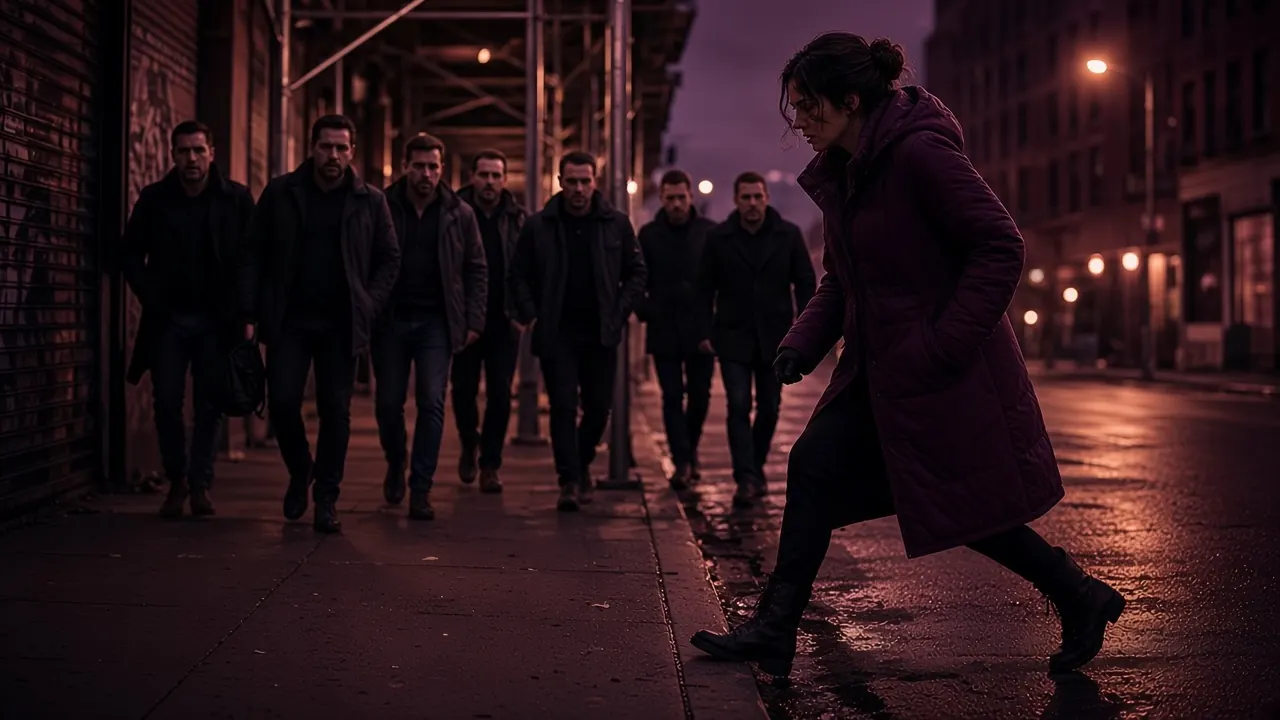
We stepped into the gutter at the same time. She was a stranger. The sidewalk was narrow — a Brooklyn block in late September, scaffolding on one side, a stoop on the other — and a man walking the other way had not slowed down. We both, without speaking, without looking at each other, stepped off the curb. Our shoes hit the asphalt in the same half-second. He kept walking. We caught each other’s eyes for the length of two parked cars and then we kept walking too.
I have been thinking about that look for nine months. I am thirty-one. I have lived in three cities. In each one I have spent some part of every day stepping off curbs to let other people through, and almost without exception the other people have been men, and almost without exception I had not noticed I was doing it until I started counting.
I counted for two weeks. I am not a person who keeps spreadsheets. I kept this one. Forty-seven curb-steps in fourteen days. Thirty-nine of them onto asphalt. Eight of them flush against a building. Six of the forty-seven were avoidable — there was real room on the sidewalk and I stepped off anyway, because the body had already done the math. The grammar of being the protected party turns out to also be the grammar of getting out of the way of the people who are protecting you.
I want to be careful here. I do not mean this as grievance. I mean it as an observation about geometry. There is a quantity of sidewalk available, and a body that takes up some portion of it, and a body coming the other way. The negotiation of who steps off is not always gendered. Sometimes it is age, sometimes it is rush, sometimes it is who saw who first. But across forty-seven encounters the pattern was lopsided enough that I stopped being able to explain it with rush.
The most uncomfortable moment of the experiment was the day I did not step off. I had decided, that morning, that I would walk down Atlantic Avenue without leaving the sidewalk for anyone. I made it three blocks. On the fourth I clipped shoulders with a man in a suit and he turned and said, ‘Jesus Christ, look where you’re going.’ I did not say anything. I kept walking. I want to say I felt vindicated. What I felt was twelve. The instruction to be smaller than the room turned out to live in my shoulders, and the shoulders flinched before the rest of me caught up.
I told a friend about the experiment. She is forty-eight. She said: ‘You will get over the shoulders. The thing you will not get over is that you have to think about it. The men you are clipping have never had to think about it. That is the difference. That is the cost.’
I have not gone back to stepping off. I have also not become fluent in holding my line. What I have done is start to notice, in real time, the moment before I would have stepped off, and feel the calculation happen — speed, width, his stride, my purse — and decide on each encounter whether to spend the body’s budget on the curb step or on something else. Most days I still step. Some days I do not. The days I do not are not better. They are different. They are a different kind of tired.
I think about the woman in the gutter. I think she was somewhere between forty-five and sixty. I think she had been counting curb steps for longer than I have been alive. The look she gave me was not solidarity, exactly. It was recognition. It was: this is the room. Most of the things I had been told about how the room worked turned out to be reframings of the curb step. The curb step is the actual lesson. The rest is decoration.